

Turning Microscopy on Its Side—Literally
At OpenUC2 we love testing the limits of modular microscopy. Our newest plant-science rig, inspired by the developments with the Wageningen University in the Netherlands, does exactly that: the entire frame can be rotated 90 ° onto its back. Seedlings stay in their natural, upright orientation, while objective and camera glide horizontally—perfect for long-term growth studies that would otherwise suffer from gravity-induced artifacts.
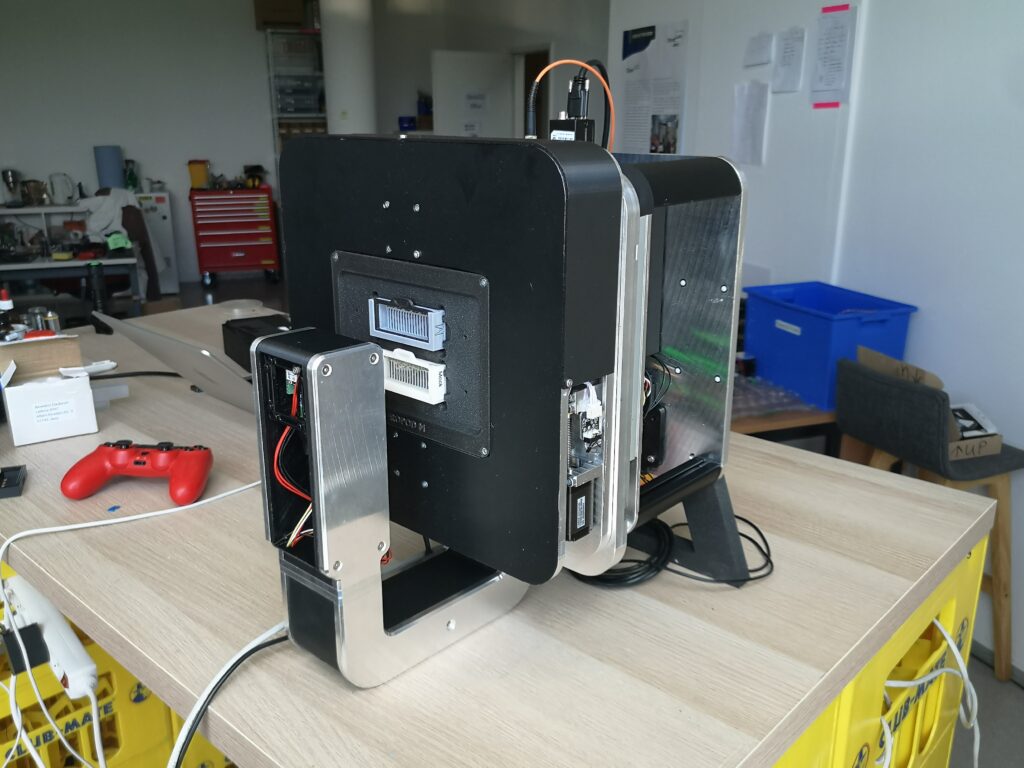
ROPOD Chambers Meet UC2 Stages
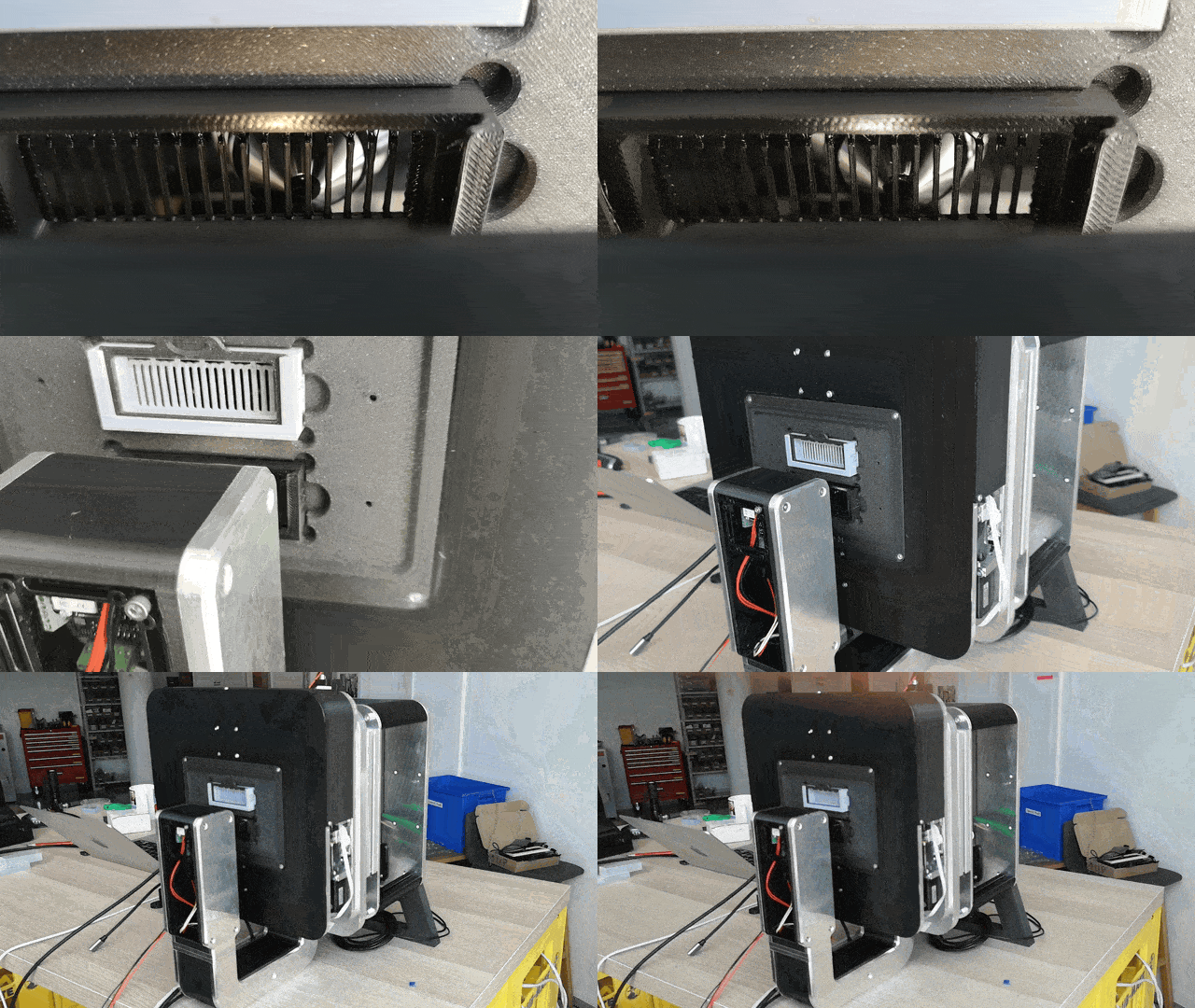
To house delicate seedlings we adopted the open-source ROPOD system (https://www.nature.com/articles/s41598-024-63226-1). Each transparent chamber provides a humid, sterile micro-environment with optical-grade windows. Two chambers snap straight into our magnetic UC2 stage, so you can compare genotypes or treatments side-by-side. A motorized z-drive sweeps through focal planes; our controller triggers time-lapse sequences from minutes to weeks, stitching full 3D stacks into a single file.
Multi-Modal Imaging
- Fluorescence: GFP, RFP – standard filter cubes drop in with zero alignment fuss.
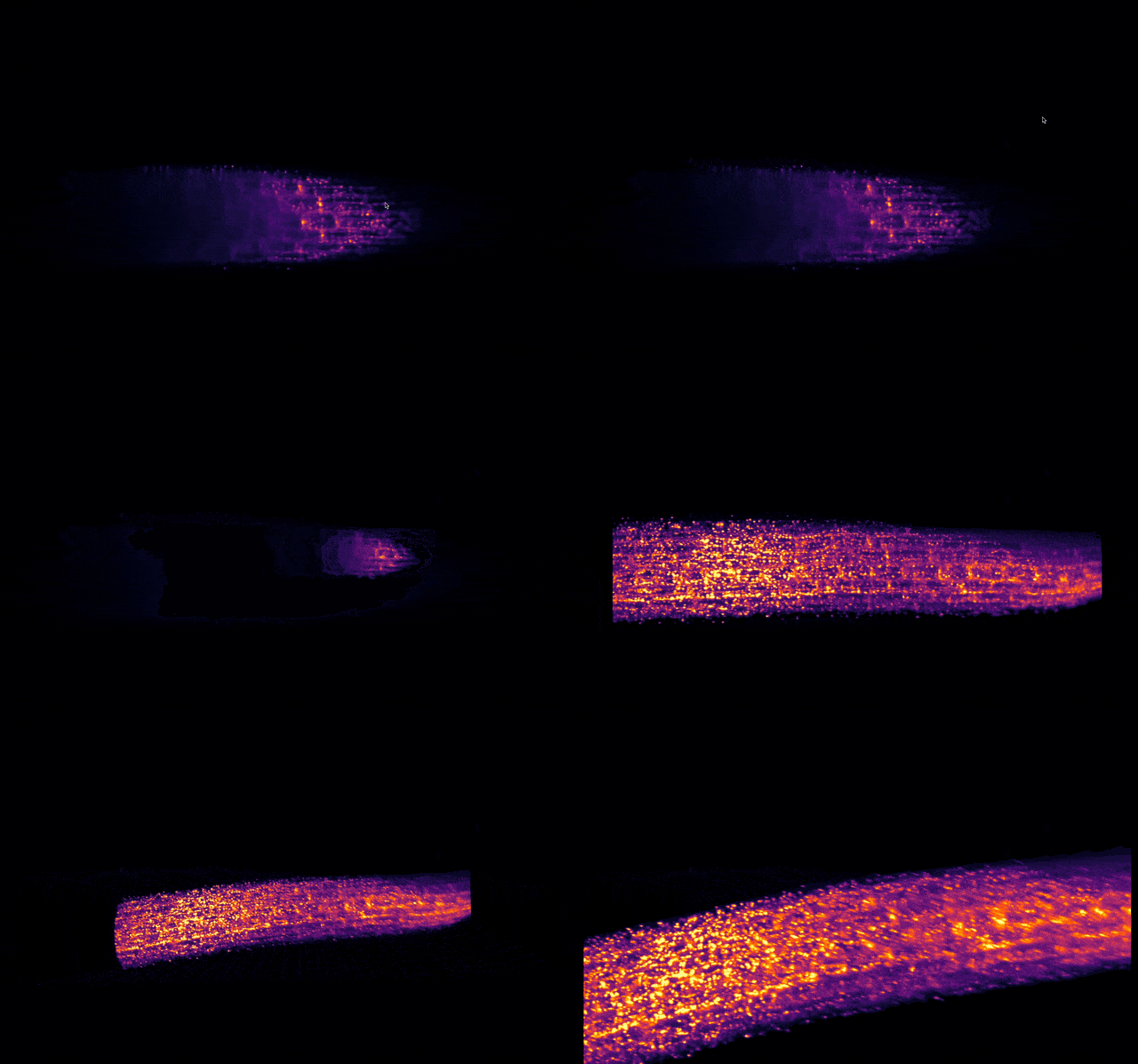
- Light-sheet: swap the tube lens for our cylindrical module and illuminate roots with a 2-µm-thin sheet for fast, gentle 3-D imaging. (e.g. with the HoliSHEET https://github.com/beniroquai/HoLiSheet)
- Bright-field & DIC: classic modalities are one click away—no additional optics required.
AI-Assisted Pest Detection
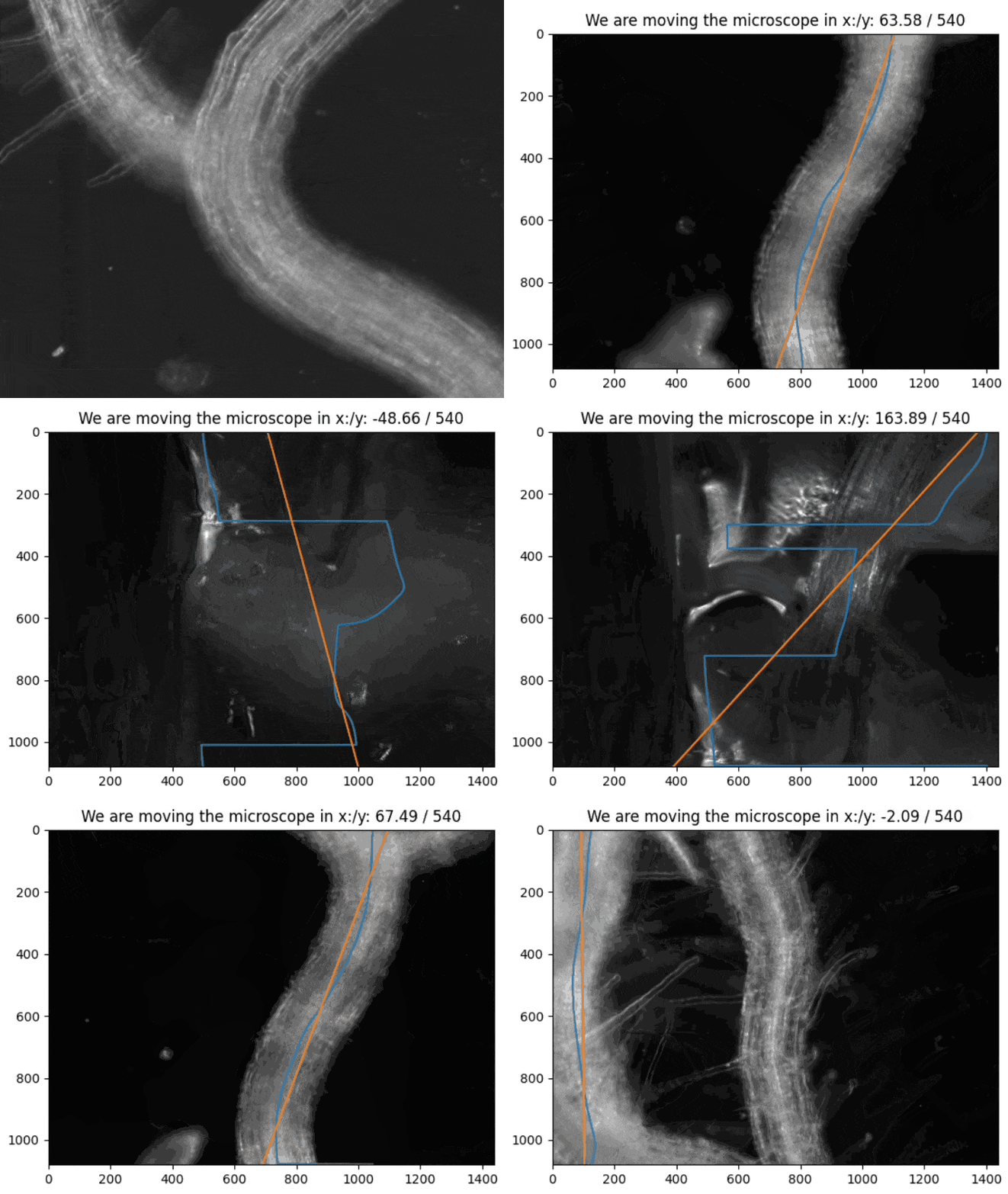
Together with the Wageningen’s Nematode Lab (José Lozano’s lab, https://www.wur.nl/en/persons/jose-lozano-torres-1.htm) we aimed to apply smart microscopy where the microscopy automatically tracks the roots and a network flags nematodes as they penetrate the root. Stem cross-sections are streamed to a Raspberry Pi 5 mounted under the stage; inference runs in real-time, marking each parasite with a heat-map overlay. In the future researchers receive instant alerts plus CSV exports for quantitative analysis.
Hardware Simplicity, Open-Source Flexibility
Any commercial microscope can collect nice pictures – ours lets you reconfigure the frame itself. The only extra part is a 3-D-printed cradle that locks the cube stack in the horizontal position so nothing tips.
Whether you study phototropism, root microbiomes, or plant-pathogen interactions, this side-mounted microscope opens a fresh angle—literally—on dynamic processes. Drop us a line at hello@openuc2.com or hop onto Slack; we’re eager to hear what you’ll flip sideways next.