
Almost exactly one year ago, we started discussing an idea together with Eugen from Blink that has since grown into a central paradigm of our work at openUC2: bringing our modular optics ecosystem fully into the digital world. We began developing the concept of an optical platform where every optical module; whether a lens, a focusing motor, a camera, or an illumination unit; exists not only as hardware, but also as a fully defined digital twin. The idea was to use these atoms and create arbitrarily complicated optical setups – together with the community. Share it and reuse it. Publish alongside a manuscript and then ensure better reproducibility.
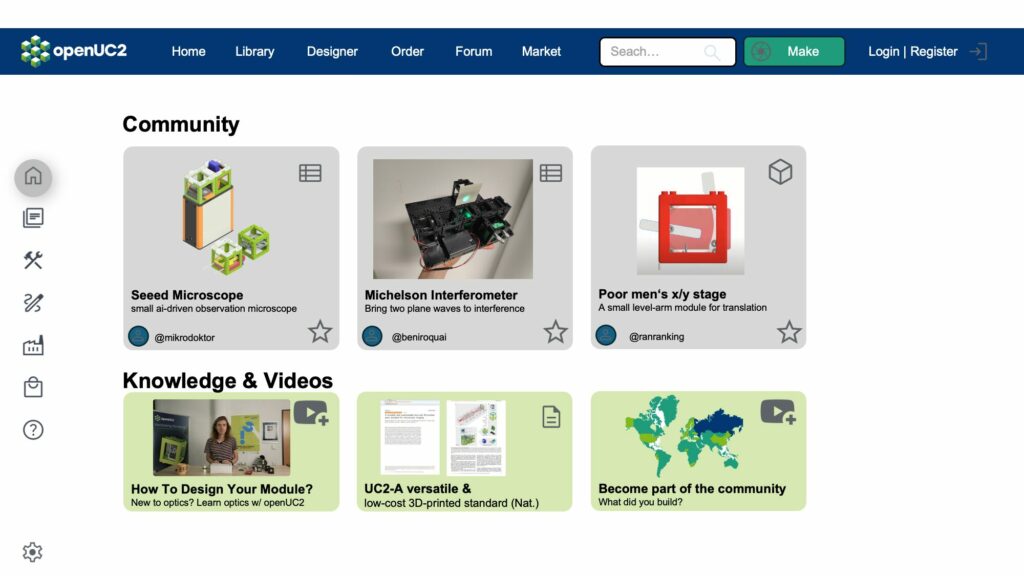
Mockup of the sharing is caring idea through the OptiKit
The idea behind “OptiKit” (current working title) is simple. Users should be able to combine optical components digitally before anything is built, understand how light propagates through the system, and automatically derive all relevant metadata. This ranges from optical parameters and mechanical constraints to firmware configurations and manufacturing files. Once the design is validated, the complete setup can be ordered directly from us. Even after delivery, the system remains flexible: new modules can be added later, and the platform keeps track of how hardware, electronics, and software fit together.
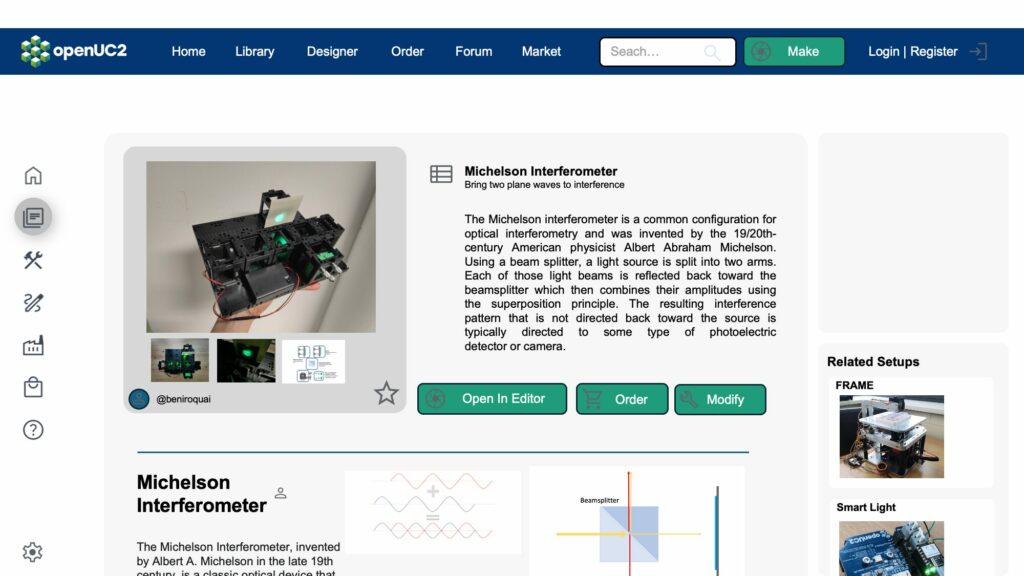
Mockup of the experimental design description
A core element of OptiKit is simulation. By visualizing the optical path in advance, users can test whether a planned setup behaves as expected before committing to physical assembly. This reduces iteration time, lowers entry barriers, and makes optics development accessible to a much broader audience—from students and educators to researchers and start-ups. The platform grows alongside the user: as requirements change, the system can be extended step by step, without starting from scratch.
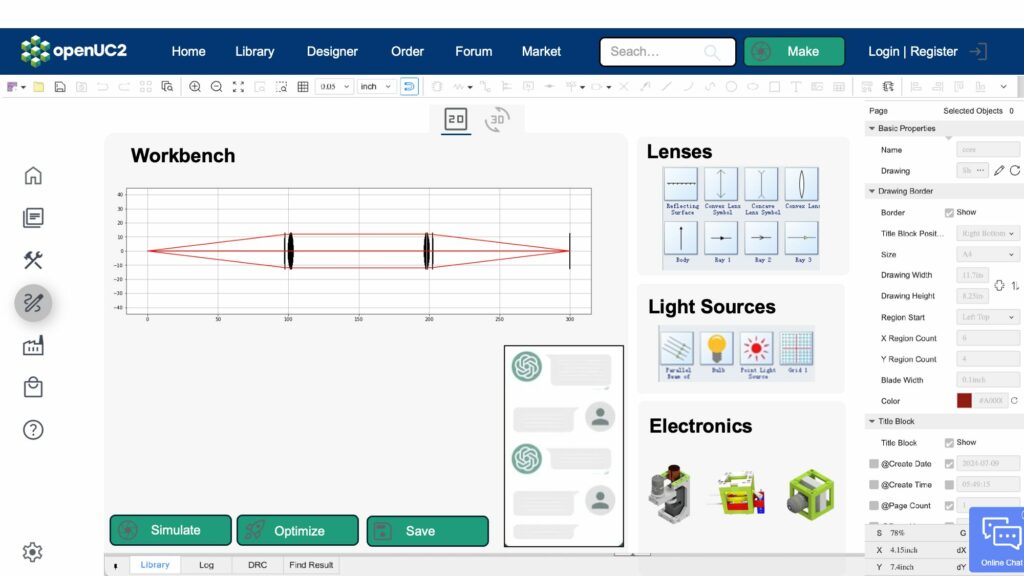
Our guiding vision is to become the Raspberry Pi for optics. The analogy comes naturally from electronics. Tools such as KiCad or EasyEDA allow engineers to place standardized symbols on a schematic, connect them logically, and then transition seamlessly into the physical world, generating layouts, manufacturing data, and even ordering assembled boards online. With OptiKit, we want to establish the same workflow for optics: standardized optical “packages” that bridge the gap between an abstract optical concept and a real, manufacturable system.
We are very excited to develop OptiKit with support from TAB (Thüringer Aufbaubank) funding, co-financed by the European Regional Development Fund (ERDF). This support gives us the financial freedom over the next two years to focus on building this platform together with our existing team and new team members (including Florian, Ethan, Johannes 🙂 from around the world. Our goal is not only to create a powerful tool, but also to lay the foundation for an open ecosystem where the community can contribute modules, ideas, and applications.
If you are curious about OptiKit, interested in modular optics, or want to collaborate with us on shaping the future of open optical systems, feel free to get in touch—we would love to hear from you.
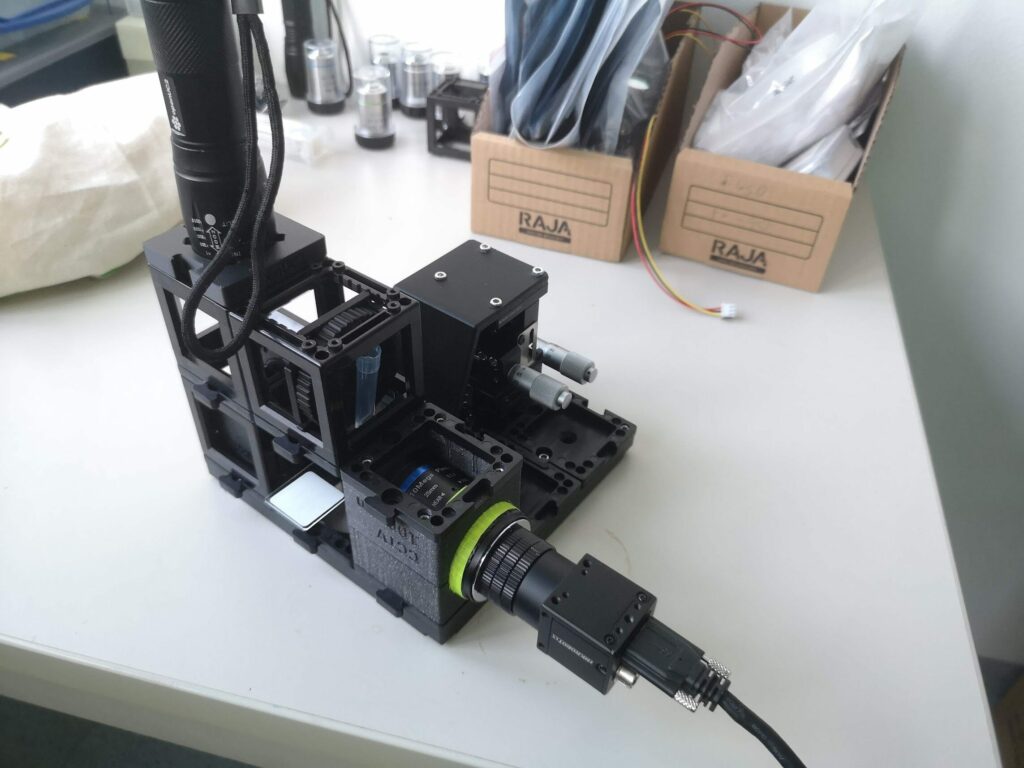
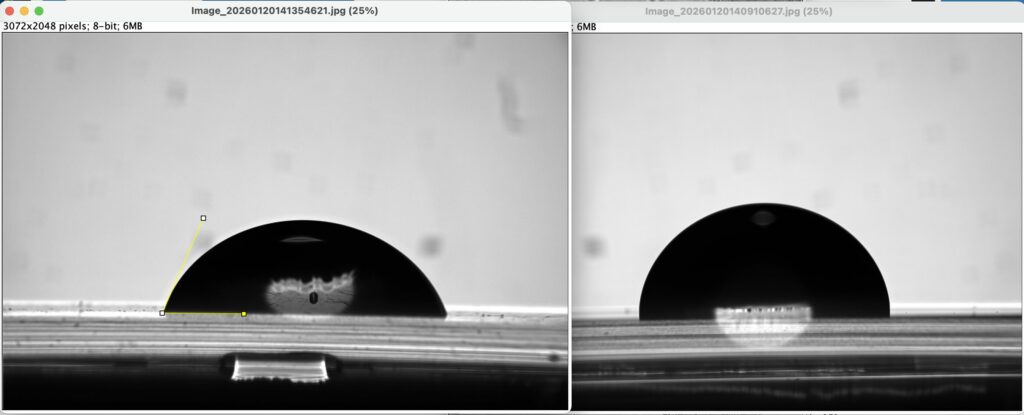
OptiKit is not only meant to be useful for microscopy. The above structure is a Goniometer that was developed for a customer through our first prototype of a platform. It serves exactly the need they wanted. Curious? Reach out to us! 🙂