
It all started with a question: could we image biophotons from plants using our open-source microscopes? Martin from the Open Science Foundation approached us to ask whether our knowledge and hardware could take on this challenge.
The Inspiration
There’s a significant paper in which researchers pointed very expensive camera hardware at dead and alive animals. The results were striking: live animals showed a significantly higher photon dose reaching the camera than dead ones. This suggests that certain metabolic processes, linked to oxygen reduction, may lead to the emission of photons. More on our collaboration here https://opening.science/institute/open-hardware/
A nice comment/blog article summarizing a lot of different threads can be found here https://www.nature.com/articles/d41586-026-02311-z
The dead-or-alive paper can be found here doi.org/10.1021%2Facs.jpclett.4c03546
Building a Reference System
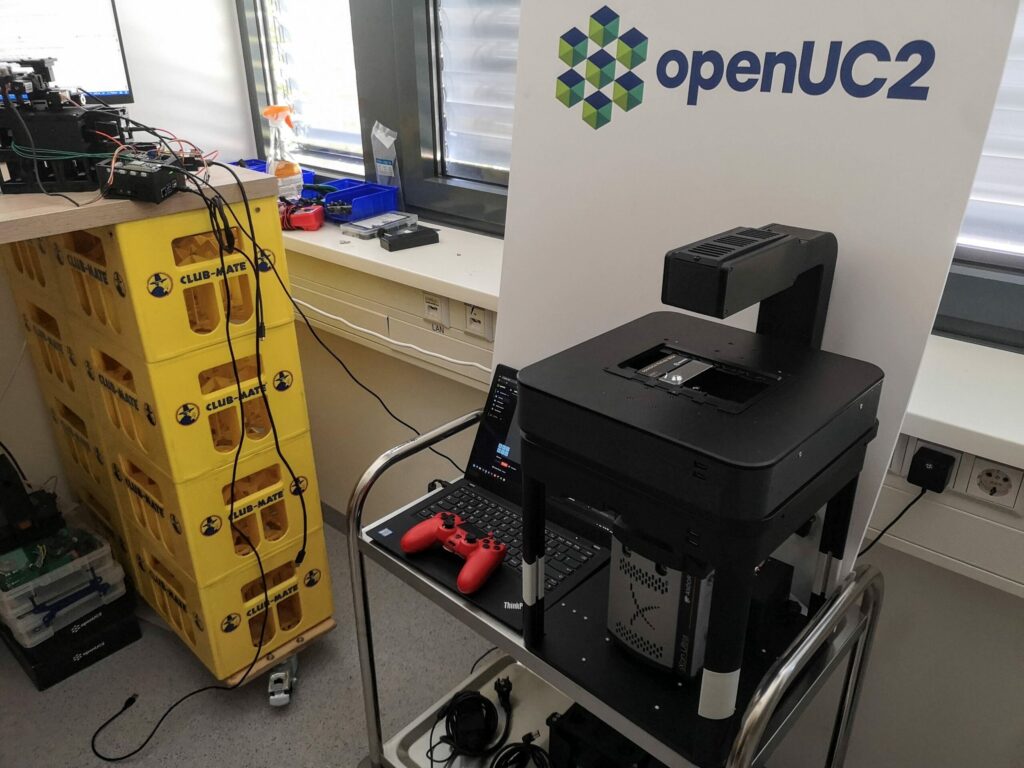
Our first task was to develop a microscope based on the openUC2 FRAME that could adapt different cameras to build a reference model, starting with a highly sensitive EM-CCD camera from Andor. This camera can be cooled to -100°C and has read noise in the sub-electron RMS range. The catch: it costs twice as much as the FRAME microscope itself, putting it out of reach for many researchers. Our goal was to build a microscope that stays true to the openUC2 principles: affordable, available, and accessible.
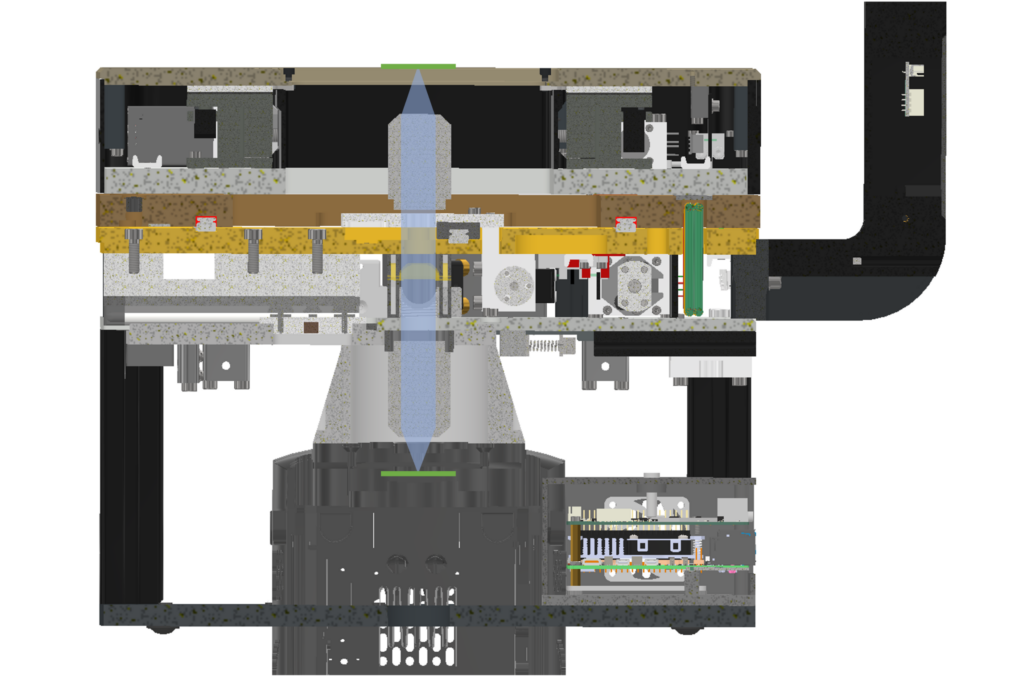
For the optical beam path, we relied on a common macro-imaging geometry: two low-magnification, high-numerical-aperture lenses in tandem, one pointing at the object, one at the camera sensor, giving a magnification of roughly one, while still achieving a large field of view and decent resolution. We used the absolute pro version of a high NA low Magnification lens from Nikon the CFI Plan Apochromat Lambda D https://www.microscope.healthcare.nikon.com/de_EU/products/optics/selector/comparison/-179794
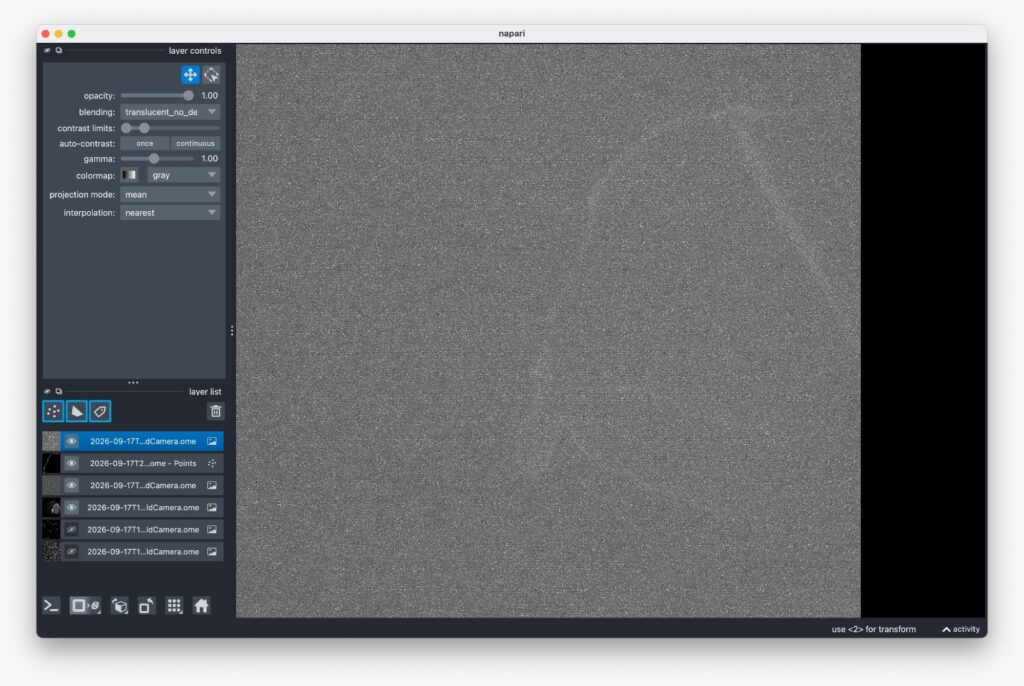
With this setup, we demonstrated that the microscope could detect photon emissions down to a few photons per second per square centimeter, over acquisition times of 30 to 60 minutes. The key challenge is signal-to-noise: you need to acquire enough photons that the thermally induced noise floor stays well below the already faint biophoton signal.
Cutting the Cost
Our second goal was to bring the overall price down using cheaper lenses and, more importantly, a more affordable camera, since the camera is the main cost driver of the whole system.
Together with our colleague David, who ran calculations on the expected photon dose and signal-to-noise for a cutting-edge EM-CCD versus a back-illuminated, cooled CMOS camera (the kind typically used in hobbyist astrophotography), we found that sensing photons from plant samples might indeed be possible with the cheaper option.
The key was reducing thermally induced electrons that degrade signal-to-noise which meant pushing the sensor to very low temperatures. The problem: these cameras are only air-cooled, even though they include a TEC (Peltier element) to go below zero. With the stock cooling, we never got below -10°C, so we had to find ways to go much lower – of course, the openUC2-way 😇
Chasing Colder Temperatures
Based on the datasheet for our camera’s IMX571 sensor, a sensor temperature around -30°C offers the best signal-to-noise ratio and quantum efficiency for green-to-red wavelength photons. Back-illuminated CMOS sensors, however, lose quantum efficiency significantly at lower temperatures.
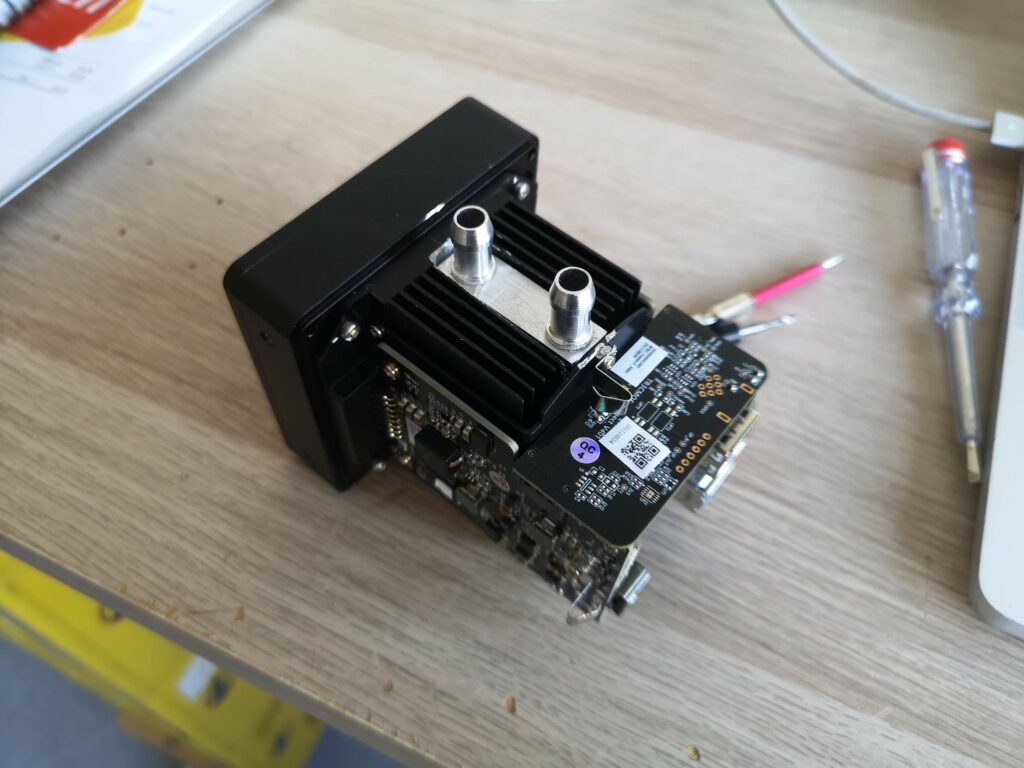
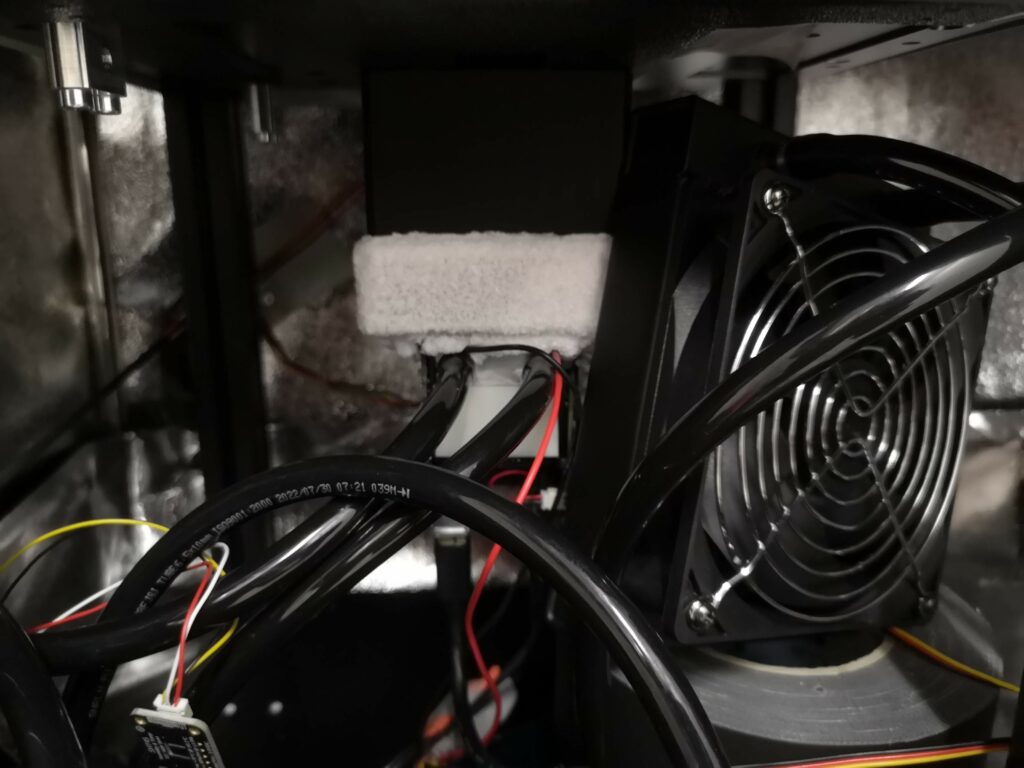
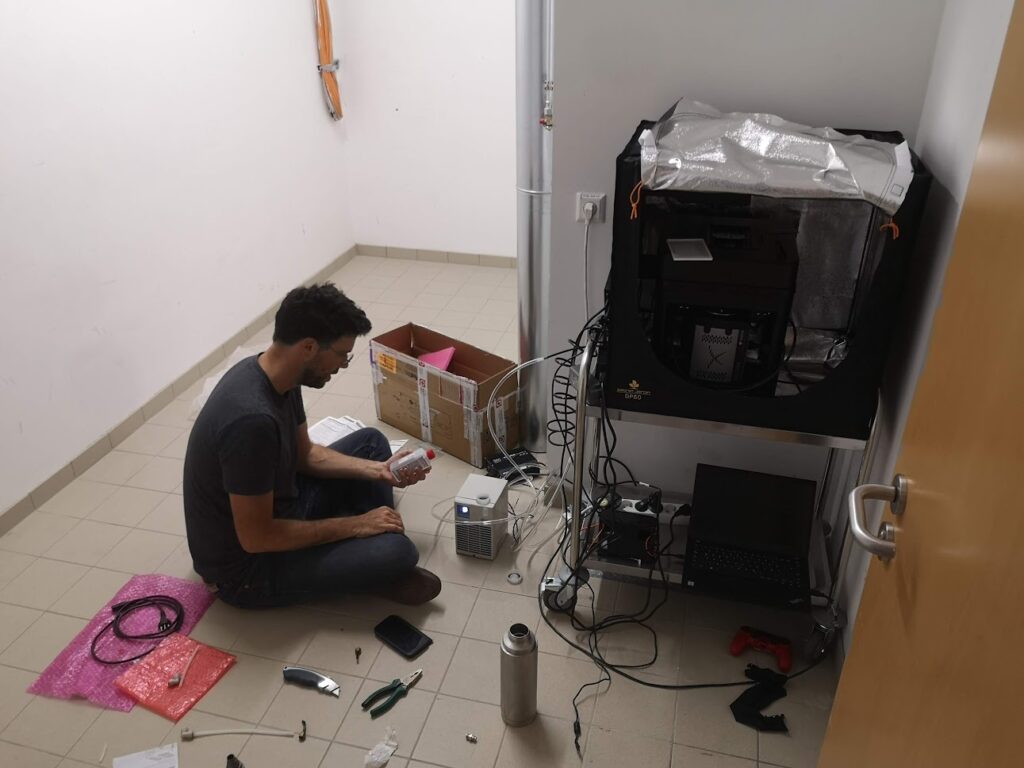
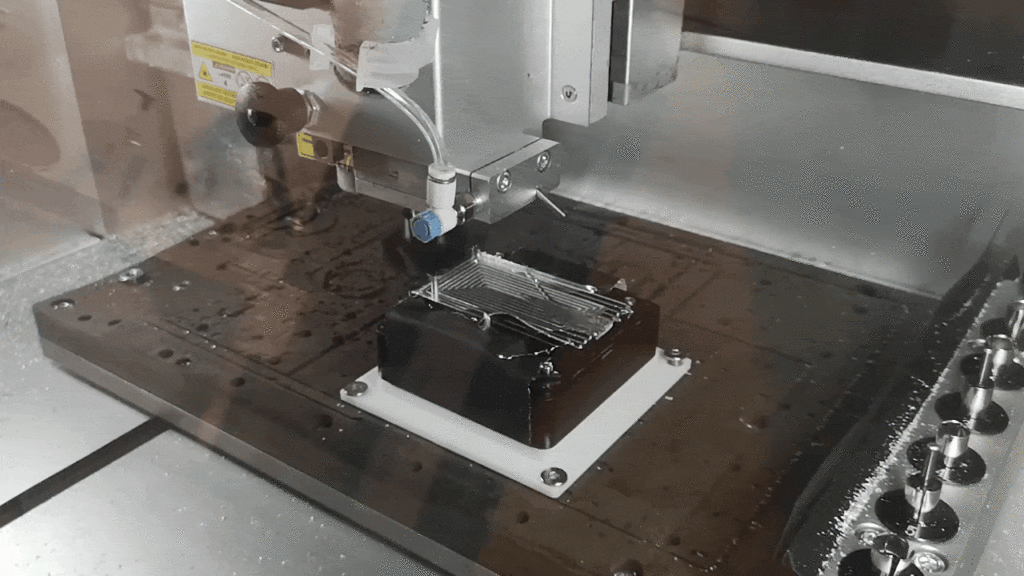
So we took a fairly drastic approach: adding water cooling to pull as much heat as possible away from the camera sensor and its built-in Peltier element. We removed the stock cooling block entirely using a band saw, then machined the surface behind the sensor flat and smooth with a CNC mill to get an even aluminum contact surface. We applied thermal paste and attached a water block, fed continuously by a chiller circulating 10°C water.
This got us down to -30°C at the sensor. Enough to meaningfully increase the signal-to-noise ratio and separate real photon signal from thermal noise.
And honestly speaking, this camera was really hacker-friendly. Nothing broke, easily repairable with some screws. Worth the try! I would do it again. Any time!
Hitting the Limits
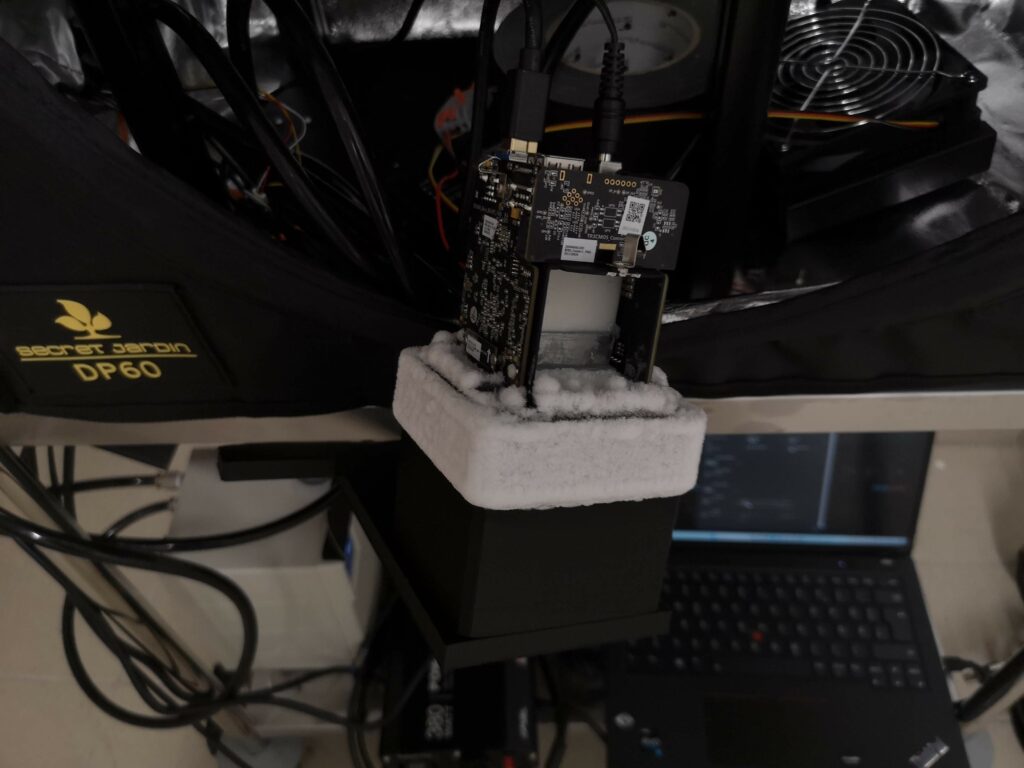
Pushing further, we added a second Peltier element between the water block and the camera sensor to try to reach -50°C. At that point the whole assembly became cold enough that condensation and eventually ice started forming on the aluminum block. A heated window solved the icing issue, but ultimately we decided to prioritize lower overall energy consumption and stuck with the water chiller and water block alone, without the second Peltier stage.
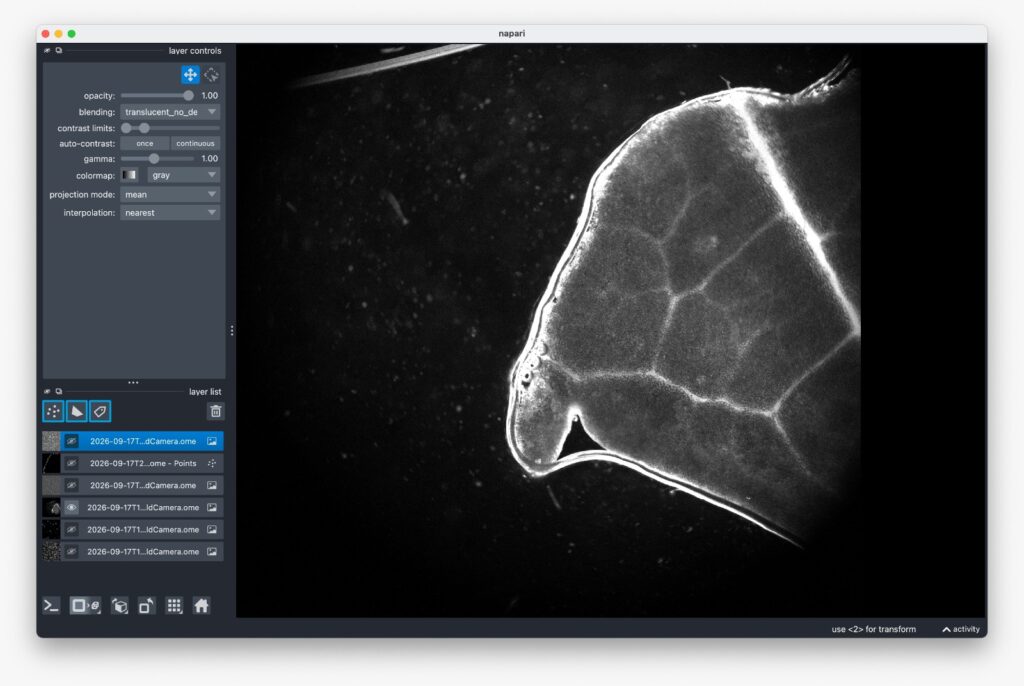
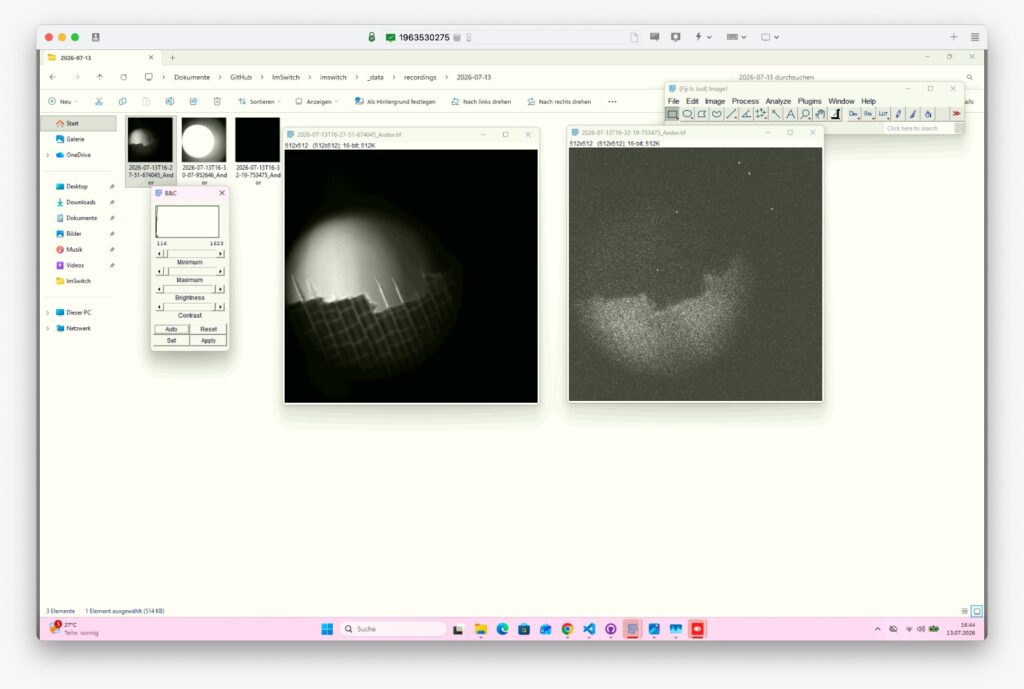
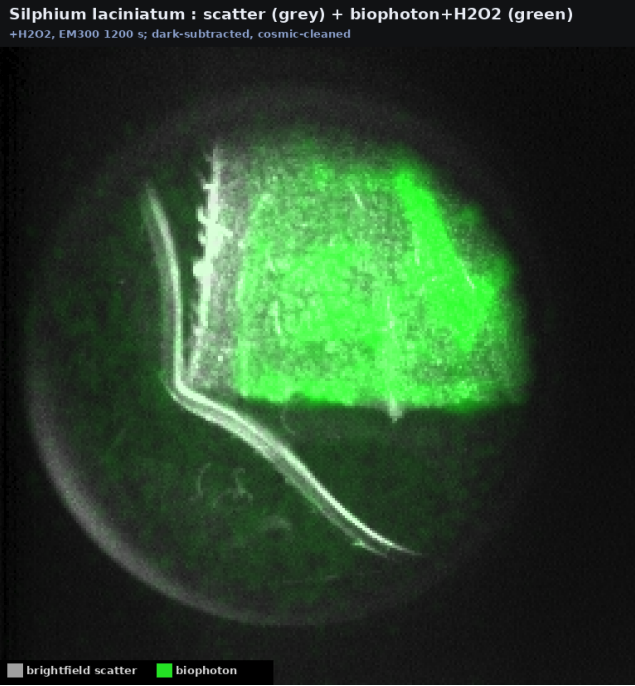
Importantly, this cooling system doesn’t increase the camera’s overall footprint, and it’s a cost-efficient way to reduce dark current. The first results are very promising. It shows photons over the course of a 30 minute exposure at the wound of the plant tissue. Stay tuned for more!
Where This Leaves Us
The result is a relatively low-cost microscopy setup capable of imaging both luminescent and biophoton samples. If you’re curious to learn more, get in touch. We’re happy to help, or to put together a quote for a system of your own.
We’re looking forward to supporting the biophotonic imaging community across different fields with microscopes that are available, affordable, and accessible.